Showing posts with label links. Show all posts

Tuesday, March 11, 2025

Review of Kalehua Kim's "Mele"

Kalehua Kim, Mele (Trio House Press, 2025) 100 pages, poetry, forthcoming on July 1, 2025. More info here.


Kalehua Kim explores themes of death, family dynamics, and the relationship between mother and daughter in this collection of songs as poetry. I was excited about this as an indigenous work. It seemed to have a lot of potential as a book that has many layers of possible understanding and prisms of viewpoints. 

I was especially eager to learn some Hawaiian until I discovered that each time Hawaiian appears in the text, it is a repetition of an English phrase that has already occurred, making it merely decorative - a flower to signal that this is an indigenous poet - but serving no real depth of purpose in most cases. Identity as product placement?

My favourite parts of this collection are those that focus on the poet's personal memories of her mother: how she used to sing all the time, the songs they used to share, and the intimate moments by her deathbed. These moments carry the weight of depth and of real soul. This is where we feel closest to the emotional need that drives the poet to write in the first place and where the poetry feels the most original.

Favourite lines:

"I have lost all but one tale/ you told to me in childhood./ Days were longer then," - "Ka Hale, The Nurturing Place"

"You yearn for the days when your people died/ in the beds in which they were born." - "Dying Looks Like"

"we shared so/ many words/ all we didn't say/ full" - "Glottal Stop: My Mother's Last Words"

"Other mothers find me here://... they all come to me, mothers mothering me/ Mothering with a silence that is not her silence." - "Not One Parking Space"

"His silence, humid and thick as thunder,/ hangs heavier than the sun-sapped mangoes" - "Memory Sonnet"

"No cloth can keep you clean" - "Woman's Work"

"My belly ready to spill its light// ... I pushed until I broke open with light." - "Makalii and the Stars That Followed"

"the only way to look at time is to refuse to see time" - "Ha"

"The weight of fruit strengthens/ the branch eventually." - "Songs for the Life I Chose or How to Stay Together"


Saturday, February 15, 2025

"Come Hell and High Water: Helene" Special Is(sue) Release


Dear Kinfolk,

It’s here! The “Come Hell and High Water: Helene” Special Is(sue) is live! You can view it here:https://www.avantappalachia.com/special-issues.html. This is(sue) will remain readable on the website as long as the website exists under the Special Is(sues) tab on the menu. Thank you all for your heartfelt responses and tributes to this momentous event. Ironically, I am writing you this on the day that Central Appalachia is experiencing its annual Spring floods, except this year they are exceptionally fierce. Somehow, it feels appropriate.

Submissions are still open for our regular Is(sue) 17. The deadline for that is April 30, 2025. Send us your weirdest, most fun creations! Art, poetry, and short fiction. Please, follow the guidelines as we do reject submissions that do not meet the guidelines.

We wish everyone all good things and see you in April! Thank you for being wonderful, witty, experimental, and fabulous!

Sincerely,

Sabne Raznik

Poetry/Art Ed(itor)


Saturday, February 8, 2025

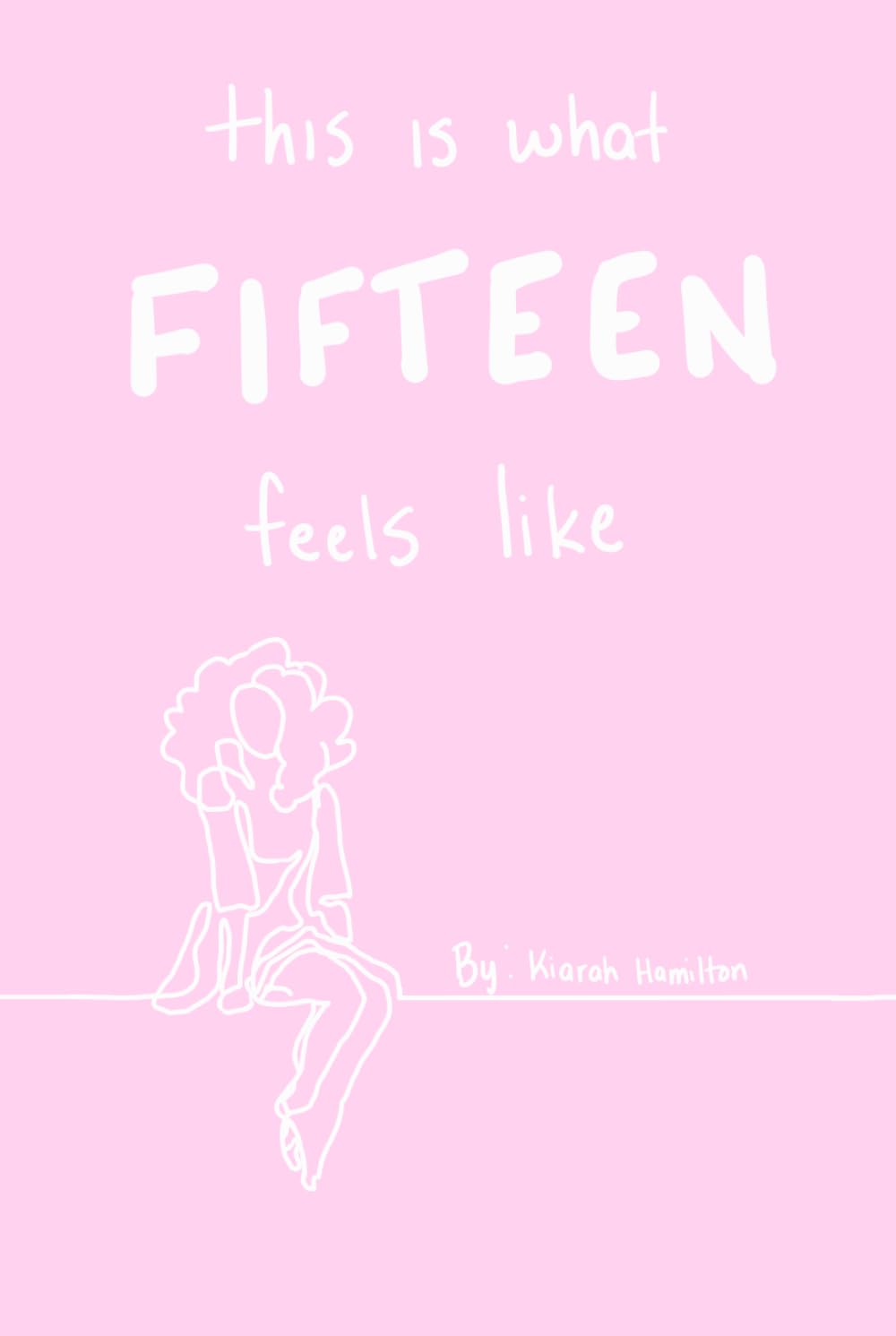
Review of Kiarah Hamilton's "this is what fifteen feels like"


Kiarah Hamilton, this is what fifteen feels like (KDP, 2024) 145 pages, poetry, $19.99 US. Order here.


Hamilton invites us to read this collection from the point of view of our 15-year-old selves so that's where I'm going to write this review from (mostly). I say "mostly" because I'm late Gen X and Hamilton is Gen Alpha, I believe, so our 15s are very different POVs. When I was 15, the internet was called "Prodigy", it was dial-up, extremely expensive, almost no one had it (almost no one had a PC), and social media didn't exist yet. Late Gen X are in general a nihilist group of people who believed the world would end before they finished college and as teenagers were criminals and gangsters who got away with everything precisely because they were the first generation with parents who divorced at high rates, worked two jobs, daycare didn't exist yet, and smartphones were sci-fi. It was ghetto. I'm sure it's extremely difficult for kids today too, just in very different ways. Same old threats with new avenues.

As a teenager, I was a moody goth but not goth, punk but not punk, (nowadays the term might be "emo") loner who wrote poetry and lurked in shadows and wore black as often as my mother would let me get away with it. Because if you wear black and stand very still, you can be as near to invisible as physics allows. Very handy for avoiding bullies. My poetry was similar to Hamilton's but much less innocent and light. I wrote about dark stuff. I wrote about stuff I lived with, violence and loneliness and darkness. And I found beauty in it. And, stereotypically for a teenage poet of my generation, I could quote Edgar Allan Poe's "The Raven" on cue (I can't anymore). None of my early poetry survives today.

Hamilton writes more as a teenager should, if there is such a thing. Her poetry is as light, innocent, and clean as her book cover. It's refreshing. She writes about the pressures social media puts on youth to have a certain appearance, which is something that certainly hasn't changed, although social media has prismed it uniquely. She writes about social anxiety, the stresses that hormonal changes bring, trying out different hobbies to find a few that'll stick as she works out who she is, and her crushes. All typical of the adolescent experience. And which certainly do help take you back to your own personal experiences.

There are some poems here that give you a window into Hamilton herself. She writes about moving around a lot and about her family dynamics. Another fun feature is that she includes a playlist of songs that you can look up on Spotify or YouTube. This places her 15 in a specific time frame - more so than the copyright notice will because not everyone reads a title page - but it also includes a whole other dimension to the book and a view into the poet's mind. I particularly liked this because when I write, I always have soundtracks in mind too. But since it never occurred to me that I could simply write up a playlist to include, I weave the songs into the poems and books themselves in ways I'm sure no one has caught on to, lol. Hamilton's playlist is an elegant solution to this conundrum. 

In summary, this is what 15 feels like. The poetry is not sophisticated. That's not what you're here for. But it is what you're here for. A walk down memory lane vicariously. A reminder that no matter how many years have passed, 15 is never very far away.


Thursday, January 2, 2025

Review of Stephen Spanoudis' "Final Orbit: Not All Ghosts Are Human: The Autobiography of Mario Ng (The Republic of Dreams)"


Stephen Spanoudis, Final Orbit: Not All Ghosts Are Human: The Autobiography of Mario Ng (The Republic of Dreams) (The Other Pages.org, 2021) 215 pages, fiction, $9.99 US. Order here.

I am a poet and I read mostly poetry and nonfiction. In 2023, I decided to read more fiction. I want to learn how to write better prose to write the stories my grandparents wanted me to write. Better late after their deaths than never. And there is no better way to learn how to write than to read. And it seems the world is conspiring to help make that happen: I always wanted to join a book club and that happened in 2024. What is the group interested in reading? Fiction. And in 2023, Stephen Spanoudis gifted me (out of the blue) two of his novels.

Both these novels are part of a series. Final Orbit is the 8th book but is written as a prequel to the others. This review will focus on Final Orbit. A review of the second book is forthcoming.

Final Orbit took a while to get off the ground (pun intended). You had these two incredibly determined and intelligent people overcoming underprivileged backgrounds to succeed in challenging careers (astronaut and musician, respectively). They have fulfilling lives. Everything seems to be winding down to a kind of calmer precursor to retirement and I'm wondering "but am I only halfway through the book?" And then BOOM (literally), the real story kicks off. And takes your breath away, rips your heart out, and leaves you gasping and needing to take a walk around the room a few times. You're going to need to take a minute. That's just the first drop of this roller coaster.

This book is equal parts future dystopia, science fiction, drama, romance, psychological study, and inspirational fiction, with a bone thrown to the Harry Potter in the briefest way possible, and for once the U.S. is a side character in major "historical" events. It's popular today to categorize fiction as narrowly as possible for social media tags. But it's difficult to categorize this in any way more niche than simply "fiction" because it fits so many tags at once. 

I'm tempted to say there could be maybe a little too much happening here. It's a lot to process emotionally and mentally for an average reader. It's definitely written for an intelligent, quick-thinking type who will be mindful to shepherd themselves kindly through the emotional ups and downs. But there are valuable nuggets of wisdom one can carry forward into the real world as well.

Monday, May 27, 2024

Review of "Word Troubadours" by PJ Swift and Ellyn Maybe


PJ Swift and Ellyn Maybe, Word Troubadours (2024) 32 pages, poetry, $10.00 PDF; $15.00 Physical book. Order here.

Ellyn Maybe is a spoken word artist I first came across when she was in the Los Angeles area about 15 years ago working in a creative group centered more or less around Beyond Baroque that included the likes of Yvonne de la Vega, Ray Manzarek (formerly of the Doors), and Michael C. Ford who took Beat concepts, wrapped them in a confessional flare with a punk rock graffiti edge, and rapped them - sometimes whimsically, sometimes cooly, sometimes sing-songy - over jazzy soundtracks. This is the first of her works I have encountered as a purely on-the-page experience. This is also a collaboration with PJ Swift.

This creation is titled Word Troubadours and music is therefore an important theme throughout. Music, singing, performing, visual art - this collection is the space where poetry intersects with most other forms of artistic expression. PJ Swift presents the metaphor of poem as a Rave and Ellyn suggests that life is a Musical. I personally would argue against both concepts as being either misconceived or over-romanticised, but each to his/her own. Still, that gives you an idea of the highly unconventional, almost dreamscape of these poems. And I'm always excited by hyper-imagined, nonconventional mentalscapes in poetry.

Ellyn Maybe includes a kind of personal Odyssey with "Ellyn Maybe's Dream" where she travels to Prague - whether only in dream or also in waking life, I'm not sure - and has a transformative experience that involves a gargoyle. 

Some phrases I wrote down that stand out:

"We resist the temptation to crawl into the world/ and pull our psyches over our heads./... We need our exuberance more than our math." - "Cinema Dance" - Ellyn Maybe

"I know how men make women wear armor of all kinds" - "I Heard What Sounded Like A Song", Ellyn Maybe

"Perhaps life is like a multiple choice question my friend/ The answer's in a circle dance with no beginning or end." - "Somewhere in the Sky", Ellyn Maybe

"an era whose burdens/ have granted no choice" - "Creation of Myths" - PJ Swift

"avalanche in the bones of the land" - "Train", Ellyn Maybe

May these Word Troubadours keep on soothing our souls with their songs and stories of our time for the ages to come.


Friday, April 12, 2024

Review of "Fill Me With Birds" by Scott Ferry and Daniel McGinn


Scott Ferry and Daniel McGinn, Fill Me With Birds (Meat for Tea Press, 2024) 104 pages, poetry, $16.95. Order here.


Those nights when you stay up past midnight and the conversations go silly and then profoundly deep, that's what this is.


Two mature men muse on everything from aging parents to children, to marriage, to health issues, to overcoming addiction, to God, to the changing of seasons, to resentment and forgiveness. The poems are written as if letters or emails going back and forth. But in my head cannon, they are sitting in a late-night living room in front of a fire passing a (legal) smoke between them.


At times, it can feel almost too intimate and honest for the reader to eavesdrop on politely. This is good stuff. 


Most of the lines I made note of were Scott Ferry's, I think, though I didn't track who wrote which line. If you want to know that, you can read it. But here are some of the lines that stood out to me:


"I know now it is too late for/ bargaining// the best I can manage/ is obsolescence"


"the face of god: is the inside of longing when there is no waiting left"


"Nerves are like brains,/ remember how we used to be? The body knows/ what is and isn't there."


"I lost the easy talk/ I did not want to impress anyone anymore"


"solve/ hate like a controlled burn/ near a freeway"


"I still have a fire a fire a fire"


On meditation, some of these poems are darker and heavier than they appear. The request to "fill me with birds" seems to be a wish for a lightening of the soul from the burdens voiced through these conversations. 


Tuesday, August 1, 2023

Review of john compton's "blacked out borderline from an exponential crisis"


 john compton, blacked out borderline from an exponential crisis (Ethel Press, 2023) 54 pages, poetry, limited run of 60 copies, $10.00. Order here.


On the whole, I'm a big fan of john compton's poetry, having read most of his oeuvre to date. There is something delightful and irresistible in the music of his phrases and the dagger-focus evident in each individual word. Each poem is crisp against the teeth and tart on the tongue like a green apple with a whisky after-bite in the throat. These aren't the kind of poems to cuddle up with in the winter with a cup of tea and a blanket. They do not comfort; they jar and jostle. Not as extreme as a rollercoaster. More like slight turbulence in a cross-country flight. And they are deeply autobiographical, like confessional poetry modernised. As compton here says, a kind of manifesto of his poetry as I have experienced it so far: "my house is a/documentary untelevised unwritten/a secret it grows ...the empty only a symptom."

compton's work is not the place to go if you are a woman seeking refuge from the male preoccupation with penises and sex. He is proudly gay and many of the poems go there explicitly. Since I am not interested in sex no matter who is doing it, at least not explicitly, I tend to skip those. You won't find a lot of it in my own work, to be sure, unless you are determined or it is in the context of abuse. It simply isn't a big presence in my mental life. 

There are blocks of poems here about compton losing several beloved dogs and puppies to a Parvo outbreak. These aren't sentimental in the traditional sense, however. More like love poetry with a lot of blood. And some of them can be read as metaphors for the experience of living through the COVID pandemic, and now learning to live with it as a constant background threat. He writes: "our aggression eats us." There is also a block of poems written about and to several historic poets, each one a projection of compton onto that poet in ways that are insightful.

Lest we should forget that he is, in fact, an Appalachian poet, he reminds us with his closing poem, which is a vague reminder of the ballad "Barbara Allen".

For me, the best poem in this particular collection is an ode to womanhood that has wizened and I will close this review with it: 

she pauses in wading the lake waist
high the water touching parts she
forgot had existed she slips her
hand into the murkiness wondering
if her hair ever felt like this she
knew she used to be beautiful
before age broke her body across
the floor like a chair she rocks
herself her feet moving between
the silt the ducks revolve around
her like moons before settling in
their landing they search her she
understands she is not a tree but
could she just raise her arms like
branches & feel love for a moment
a foot farther an inch deeper she
remembers how to heal a wound
with a band aid before the children
were too old to not need her she
breathes she breathes she breathes
while everyone else has finished
letting her exist


Friday, August 14, 2020

Review of "'Every Man His Specialty': Beckett, Disability, and Dependence" by Michael Davidson

 Michael Davidson, "Every Man His Specialty: Beckett, Disability, and Dependence (2007) 14 pages. On The Free Library.


Originally, I struggled with Beckett and his (obviously important) portrayal of the disabled. Was Beckett ableist or was he satirizing the (at that time, popular) pseudo-science of eugenics (which includes all the disgraceful, harmful, hateful -isms). Was he for eugenics or against it? My initial reaction to Beckett was simply that I was triggered. In the real PTSD sense. Reading his work caused me to have chills, break out in a sweat, and become physically nauseous. It seemed on the surface to be the most blatantly ableist material I've ever come across. After reading this I have made peace with Beckett. I still have issues with his methods, but I no longer question his intentions and end game (pun intended). This also includes an interesting and much-needed discussion of the ableist worldview that independence and accomplishment are what make people worthy of life and participation in society to the exclusion of disabled people who require external assistance to survive, whether that be from assistive technology or other more able people. This view of what makes a human worthy to participate in society and to have life seriously needs loudly challenged and changed. This paper argues that Beckett is highlighting these so-called "codependent" and dependent relationships to do just that. Okay then. I can definitely live with that, Beckett, and on behalf of the disabled people trying to survive and even be (a different but equally important kind of) productive within the ableist worldview - thank you!

Monday, August 10, 2020

Book Review: E D Bird's "Bitter Sweet"


E D Bird, Bitter Sweet (Createspace, 2015) 358 pages, fiction, $13.00. On Amazon.


This is the sequel to E D Bird's Goldenviron which is also reviewed on this blog. As expected, it is another entertaining, rollicking "dude flick" of a book.

Better written than its predecessor, more gritty and graphic, this installment takes us from South Africa to Barbados as the lead character seeks revenge for the events of Goldenviron. Again we have an action-packed plot and the added complication of aliases to keep up with.

Some gimmicks are overused. There is an elephant, leopard, and lion attack. This is a bit much if the reader knows something about the actual behavior of wild animals and it all begins to feel like a cliched cop-out by the time it plays out.

Also, this is not a novel for the post-Me Too world. Again, here is your fair trigger warning. Sex is detailed and errs on the side of porn. The book is rather insensitive to the aftereffects of rape on a woman's psyche - especially that of multiple rapes. While there is an attempt to make the woman a strong character who rescues herself rather than waiting for her male partner to rescue her, it does fall short of real female understanding. Later in the book, a male character vomits after watching a bomb detonate and I at least couldn't help but think these two events juxtaposed against each other only served to highlight the lack of emotional depth regarding rape.

This is an easy read not meant for children. I sensed the author left things open for the possibility of a third installment.


Book Review: E D Bird's "Goldenviron"


E D Bird, Goldenviron (Createspace, 2016) 446 pages, fiction, £10.87. On Amazon.


E D Bird has written an entertaining, if clumsy, mystery novel set in South Africa. This is not the kind of mystery you read to exercise your powers of deduction, however. The reader isn't given the chance to solve the case. But we are along for a "dude flick" plot.

The title refers to a gold mining company at the heart of an alarming number of murders. The characters stumble through several adventures - a hot air balloon ride, an abandoned mine, a kidnapping, a hyena attack, and even an AIDS clinic straight out of Stephen King's imagination - in an attempt to unravel the knots. 

Those sensitive to themes of racism should avoid this book. The "good guys" do at times display a less than open mind and the "bad guys" are overt neo-nazis. There is even a smoking chimney. This is your fair trigger warning.

There are times when the author's clearly evident love of cars overshadows the story. But this is a somewhat fast-paced, action driven book that is sure to delight a readership that prefers an escape rather than a think. 

Thursday, September 5, 2019

Sunday, September 1, 2019

Book Review of Rajia Hassib's "A Pure Heart"


LEGAL DISCLOSURE: I was given an advance reader's copy from which to write this review. I was not paid.

Rajia Hassib, A Pure Heart (Viking, 2019) 305 pages, fiction, $17.40 USD. On Amazon.


Some stories are not really about the character who seems the central one. For instance, Arthur Miller's The Crucible isn't so much about John Proctor or Abigail Williams as it is about Elizabeth Proctor. Rajia Hassib's A Pure Heart is similar. It isn't so much about Rose and her family dealing with the grief of losing Gameela to a terrorist attack as it is about Gameela. Gameela, the Pure Heart.

But what is more important than individual characters in this book is what Hassib does best: nuances.
The development and exploration of all the characters are superb. Among the subtleties addressed include differing cultures, differing belief systems, differing places, differing feelings, and differing modes of expression. She even explores how differences can exist in the same person at the same time. Hassib is a master of empathy.

Even the suicide bomber receives this treatment. His story is given in full - his is a full-fledged, complicated, and even relatable personality. If all of us were willing to look at everyone around us with similar context and empathy, violence would cease to exist.

Go read this book and make it part of who you are.


Tuesday, July 2, 2019

Book Review of "The Happy Mind"


LEGAL DISCLOSURE: I was given a review copy of this book. I was not paid for this review.

Kevin Horsley and Louis Fourie, The Happy Mind: A Simple Guide to Living a Happier Life Starting Today (TCK Publishing, 2017) 113 pages, self-help nonfiction, $17.19 US


Book available on Amazon, from TCK Publishing by Kevin Horsley (also on Twitter) and Louis Fourie. TCK Publishing is on Facebook.


"Simple" is the operative word in the title of this book. It is a handy little guidebook of reminders, cliches, and random quotes about how to train your thinking to a mindset of positivity. Many of the suggestions and principles are sound and beneficial. It's an easy, light read. You can breeze through it in an hour or two.

It is written to encourage interactivity. At several points, one is given a negative list and told to rewrite it as positive and then apply that positive list to one's life. Interactivity is a good idea. One is more likely to apply what one learns if one interacts with it on any level.

However, the sentences are usually written in the negative, not just the lists meant to be actively rewritten. The book seems more focussed on what happiness is not rather than what it is, what one should not do rather than what one should do. The negative perspective is subtle but it is pervasive. For a book meant to encourage positive thinking, that negative slant is directly counter to the message and the result is jarring.

Also, I understand that the authors wanted a light easy read, but the complete lack of references or even a bibliography at the end was a bad decision. If an author refers to a study in the text, that study should be referenced somewhere within the book. The total lack of anything to back up the statements within the text automatically discredits that text. It is possible to write a book with scholarly references to scientific and medical studies in a light simple way. This presentation leads me to believe the authors do not trust the readership's intelligence. Especially in the current climate of fake information, references are essential to back up any assertions.

In view of the shortcomings, I felt this book was written as a kind of children's handbook to happiness. (One could argue that the term "happiness" in this context is itself problematic and part of the culture that teaches us unhealthy thought patterns, but that's a whole other subject for a separate essay of its own.) It is helpful; the principles are sound and can be efficaciously applied. The attempt to include an element of interactivity is inspired if poorly executed. But it fails to implement many of its own suggestions in the way it is written and equally fails to back up its "facts" with appropriate references. In that way, perhaps, the authors erred toward writing too simply for this "simple guide".

Friday, February 2, 2018

Truth On Trial - The Crucible


Come and see me as Goody Proctor in this production of "The Crucible".

At Artists Collaboritive Theatre, Inc. in Elkhorn City, KY. - Truth is on trial. Extremism and mob mentality rule the day - the timeless story of ordinary people choosing between reputation and integrity, life and death. Arthur Miller's classic yet challenging script brought to life with unique set design and tech, yet as historically true to the period as possible. Emotions run high in this drama. Boundary-breaking in that a disabled actor is cast in a leading role and the set is built to be completely accessible. Sabne Raznik as Goody (Elizabeth) Proctor. Runs February 15-March 4 and March 15-18, 2018.

Saturday, November 26, 2016

Spoken Word Review: Ellyn and Robbie's "Skywriting With Glitter"


I first met Ellyn Maybe around 2012. She was formidable then; even more so now. Read my review of her "Rodeo For The Sheepish" album for more of those details. So it's been a while. The world has changed a lot since then. Maybe has moved on from Beyond Baroque into a new scene, poetics in general has continued to change, and Spoken Word has gained more respect as an art form that is both poetry and music - its own subset of art.

Accordingly Maybe has upped the ante since "Rodeo For The Sheepish". "Skywriting With Glitter"  features Robbie Fitzsimmons' ethereal music and vocals. In some ways, this album is much simpler and more emotional than "Rodeo". It's like a dream, a whimsical fairy tale a la "The Princess Bride" , The Little Prince", or "The Point".  This is immediately apparent with track titles like "Myth", "What Color is Your Parachute", "The Girl of the Wishing Well", "The Life of a Raindrop", and "Kingdoms in a City Lost to Time". This isn't merely Maybe reading her poetry over Fitzsimmons music, however. Sometimes Fitzsimmons sings haunting lullabies.

Like many lullabies we were sung as children, these whimsical fairy moments have dark underbellies. I can't decide if these are slightly masked emotional introspection or densely weaved commentaries on modern society. At times they could be either or both. The girl in the wishing well nightly "looks history in the eye" and "chews on life a bit". "The Life of a Raindrop" could be a tongue-in-cheek description of recurring depression or angst. "Onset" is clearly about a midlife crisis. "Kiko of Greenville" is an interesting comment about social media. "Anybody" is about the posturing we as humans do to be accepted by those who surround us. But even in its darkest moments, the album never becomes full blown negative. "Kingdoms in a City Lost to Time" proclaims "you are all that you need."

Fitzsimmons' piano and vocals are intrinsic to the overall other-worldly feel of the album. For me, the best track is "Up Is Down". This is lyric poetry at its best, except it is sung. "Dance in moonlight cloud/ forsake the human crowds/ swim into ancient gowns/ underground// there is a light above/stars in the sea of love /reflection in the scope of all you mention"... "Sink into a world of sand/ just like any other man". I could listen to this on repeat some nights.

"Skywriting With Glitter" trumps "Rodeo For The Sheepish" as well as complements it. It's hard to foresee how Ellyn Maybe can improve on her work from here, but I'm eager to find out. And I'm just as eager to become more acquainted with Robbie Fitzsimmons.

Get your copy of "Skywriting With Glitter" at CD Baby.

Wednesday, March 9, 2016

Review: "The Architecture of Chance" by Christodoulos Makris


Christodoulos Makris, The Architecture of Chance, (Wurm Press, 2015) 108 pages, poetry, $19.00 U.S.

Christodoulos Makris has established himself as one of the most important experimental poets working in Ireland today. The Architecture of Chance is his latest offering.

This is an exciting collection. Makris is fearless in his experimentation and is pushing poetry into whole new forms and realms of being. Most notable in this regard is "Chances Are", which he calls a mass collaboration poem. It appears in the collection as its HTML code. This poem can be found in application at 3am Magazine. It is a poem composed of every tweet that uses the word "chance" and updates in real time. Another boundary exploder is "From Something to Nothing" in which he took an informational text on the International Monetary Fund website and cycled it through several languages back and forth on Google Translate and turned the results into a poem that reveals much about the dynamics of language in the age of the internet. Given that Makris hails from Cyprus and has spent time in the United Kingdom while being based in Ireland, this experiment could be read as a commentary on the migrant experience.

Many of these poems are also political in nature. In "16 X 16" he writes: "I would have been a completely different person without the politics and a completely different writer." This is evident in poems like "Metro Herald's Advertorial Windbags Let Loose, 28-31 May & 4-7 June 2013"(which, as the title suggests, is a composition of adverts and editorials from Dublin's Metro Herald newspaper), "Civilisation's Golden Dawn: A Slideshow"(which contains pieces of speeches made by members of Greece's Golden Dawn party, whom Makris describes as neo-fascist), and "Public Announcement" (composed from the signs hanging in the Skerries public library on a certain day).

Others are slightly more domestic. Some are composed from emails or tweets sent back and forth in collaboration. One is composed from bits of conversations overheard around Dublin on a particular day. My personal favourite is "Heaney after Rauschenberg", which takes all the four letter words from Seamus Heaney's first collection Death of a Naturalist and places them in order of appearance. While soothingly familiar in vocabulary, it decenters Heaney's careful poetics almost completely, as if Heaney fell into a black hole when he died and this is all that is left of him in the universe. In that sense, it serves as an eerie, aching tribute of sorts - even as it seeks to shatter the comfortable traditionalism of  Heaney's legacy. Here is a brief excerpt:

"sick home hard blow baby pram when came hand tell they were away held hand hers with next went into room time left four foot four foot year

grey only from cows into like away iron gate into bank with from snug rise dead eyes used soon this they cock from left hand came came down this sake spat take your time more hole tree wild more said into mare hill back like that were that time ones that back when

dark fill dead cold like they line from some keep full tall soon back fish load from surf bend turf fear make they like clay seed shot seem they show good from bark feel roots pits live live wild land root died when lain days long clay with eyes died hard bird huts guts from like were with hope like land pits into sore stop they flop down take fill then cold

west mayo crew they from when with eyes like bone skin rose fell like they kept with beef men's then poor make food they like dogs that been hard when they with they were hope less next like dark once port ship free tart from good swim sink with zeal were

from that held arms came with have them word dead till"

This is definitely a book which requires the reader to "do the work" (Anna Strong), but the rewards are substantial. The break with Romanticism and traditional verse that began with the Modernist movement at the turn of the 20th century is spinning into free fall out of control as we become firmly entrenched in the 21st (much like society in general) and, like other experimental writers like him, Makris is making sure this is well represented in today's poetry. Only, he may be doing it better than most.

You can buy it at Amazon.

The Work of Christodoulos Makris

The following was originally published on Yahoo Voices on July 18, 2012.

Christodoulos Makris is quite the rising star in poetry. He has written three collections. The first one is a low-fi publication by Wurm Press in 2009 titled Round The Clock. It is now sold out. The second is a handsome little paperback titled Spitting Out The Mother Tongue from Wurm Press in 2011. The third is a limited edition, numbered art book of 100 copies total and is titled Muses Walk.  Makris was chosen to represent Cyprus in the gargantuan "Poetry Parnassus" festival which was organised in London to correspond with the 2012 Olympics. He lives in Ireland and blogs at http://yesbutisitpoetry.blogspot.com/. This is a review of Makris' three books.

Round The Clock is eclectic and doesn't really follow a theme. Standout poems are "The Impressionists", "Competitor Vassilaras", "Serving And F---ing" (censoring that word is my doing), and "Ginsberg in Fingal". "The Impressionists" is a timely statement on entertainment today and its effect on the artist (I use "artist" here broadly, to include all the arts). Impressionist painters are depicted as being on a reality show competition where the viewers vote for the one they like until all but one of them are dead. It forces meditation on just what art and artists are subjected to in the modern environment. The end result does and should make the reader uncomfortable. "Competitor Vassilaras" reads like a childhood memory of the poet's father and documents a shocking moment when the theatricality of wrestling was invaded by the all-too-real. "Serving And F---ing" is a statement on immigration and prejudice, exile and loneliness. "Ginsberg in Fingal" reflects an ambiguous feeling toward Ireland and perhaps offers a view of it that is clearer than those native to that country can see for themselves. In the U.S., this kind of poem from an immigrant is cliche, but in Ireland it must have been a small revelation. What Ginsberg would think about his increasing cameos in 21st century poems is anyone's guess.

Spitting Out The Mother Tongue is better organised. As the title suggests, it revolves around the experience of a Cypriot immigrant in Western Europe. It is much harder to pick out particular poems in this volume because the poems support each other like paragraphs in a novel. Makris' language is almost unpoetic. There is no attempt at music here and rhythm, while present, does not immediately soothe the ear. The wording is plain and simple, as if the reader was listening to some average Joe on the street describing his surroundings. Sometimes it is that very quality which makes it powerful. Many of the poems focus on adolescence and young adulthood. There are moments when the reader gets the feeling that it's all been said before. But then a phrase or image will smack the reader back into poetic reverie. The best poems in Spitting Out The Mother Tongue are "Muses Walk" and "Nicosia Journal".

Muses Walk the book (versus the poem) is extraordinary. It represents - it is - Makris' best work to date. As part of the "Al-Mutanabbi Street Starts in Dublin" initiative, Makris took "Muses Walk" the poem (which is an attempt to snapshot, so to speak, a particular street in Nicosia) and dissected it to create this little art book. He took each line of the original poem and used it for the title of a poem based on that line until he had done so with every line of "Muses Walk". The result is more than a snapshot of a street. Now it is a full album representing the people of that street, their lives, and their cultures. This little book is a true treasure. With it, one begins to see that Makris is an important poet, not just for sleepy Ireland, but perhaps for the world.

You are not here
and I cup my hands
to gather snowflakes.
I preserve them
for as long as I can;
then blow them back
into the infant summer.

- from "Nicosia Journal".


Review: "In the Language of Miracles" by Rajia Hassib


Rajia Hassib, In the Language of Miracles, (Viking, 2015), 288 pages, fiction, $19.60 U.S.

Most of the reviews for this book talk about how this very domestic story mirrors the Muslim experience in America since 9/11. No doubt it does. But being someone who has experienced personal and family trauma, I read it less as a socio-political parable and more as the domestic microcosm of one family's troubles that it ultimately is.

The story begins one year after the family's eldest son kills his ex-girlfriend and then commits suicide. The pain is potent and real throughout this novel. Each character is struggling to cope with that horrific event and the ostracism that resulted from it in a different way according to each personality. The father throws himself into work, and being overly concerned with reputation, into somehow convincing the community to accept them again. The mother spends her days in the attic where she can still smell her lost son. The grandmother flies in from Egypt and takes over care of the household and the remaining children, trying desperately to protect them with superstitious rituals and other cultural customs.The daughter spends most of her time at another's house and immerses herself in her faith. The surviving son, who is the focus of the novel, attempts to erase his identity as much as possible and experiences a crisis of faith.

The most memorable chapter describes the mother's effort to get rid of her dead son's effects in the attic. It so perfectly parallels the actual experience of losing a child that the emotion smothered me, as it should. The climax of the story - at a memorial service held for the ex-girlfriend by her family - is chaotic and comical after all the weight of grief in the rest of the novel. Personally, the son's involvement in the scene read as out of place even though it was supposed to be his moment of clarity at last. I couldn't help but think that, instead of saving his family from embarrassment, he added to it. But perhaps that is secondary to his religious epiphany.

This book is a poignant portrait of tragedy and the fallout it leaves behind. The book goes through overwhelming emotional moments and moments of numbness. In the end, just as each family member found his/her own way through the initial shock and pain, they each find their own way to carry on and move forward into a future. It's true that - in an emotional way - one can never go back  home. Things shattered cannot be whole as they once were. But one can make a new home that is just as dear as the original one, albeit different. And the shattered thing can be glued together again. So what if the cracks show? It can still be useful, beautiful, and valued. That is what this family eventually realises.

"In the Language of Miracles" is one of the best novels I've read in the last five years.

You can buy it at Amazon.

Wednesday, May 20, 2015

Modern "Much Ado About Nothing"?


There is an internet-inspired trend in text analysis that involves computer tools, such as the above word cloud. The theory is that these various tools will help someone approach a text in a different way than one has before. This word cloud was produced by entering the text to Shakespeare's "Much Ado About Nothing", which I love, into a word cloud-making website. I must admit that for me such tools would be more helpful when composing collage poetry (because it helps to disorient the text and break it up) than in formulating text analysis.

For instance, one would naturally eliminate the character names, since of course they would be the most frequently used words in the text, and then concentrate on what is left. From there, the poetry combinations are endless and exciting and almost write themselves. But those poems would only be text analysis to the point that any collage poem is, and most poets who employ that form are thinking of anything except what is traditionally considered analysis.

So I tried a different tool: Storify. In the end, I didn't so much write a story as use it to search hashtags and internet search engines for new perspectives on "Much Ado". And I found one.

 "These Paper Bullets!" is a modern take on "Much Ado" with the music written by Green Day frontman Billie Joe Armstrong. Green Day started out in the '90s as a modern punk rock/alternative band. Since then it has become a little more pop in its aesthetics, but with a decided punk edge. Recently, Armstrong redefined what the Broadway musical could mean with his wildly successful "American Idiot" musical. "These Paper Bullets!" was his next theatrical project. The storyline revolves around a band called The Quartos, modeled after the early Beatles, and its members' search for true love in the midst of fame. Unfortunately, a recording of the full production doesn't seem to exist, which left plenty to my imagination.

Other than the curious aspects of "what would a punkish/Beatleseque version of 'Much Ado' be like?", there are also larger questions that could be explored. Much of Shakespeare's original play hinges on witty, sarcastic humor with a decided gender bias. Benedick is against marriage and very much a spouter of male virtues, almost to the point of chauvinism, and Beatrice is very much a hard-bitten feminist. Funny, then, that they should eventually fall in love with each other based on hearsay. How uncharacteristically suggestible of both of them! How would that work in a modern setting?

For instance, in this post-feminist world, why would a woman feel a need to despairingly rant out the "O to be a man" speech? The whole dynamic of the plot may have to be reworked, but what is "Much Ado" without the friction and the obvious social critique of his time that Shakespeare meant it to be? Also, it is no longer a life and death matter whether Hero really "tarnished" her honour or not. That too would have to be rewritten. What, therefore, would be left of the original play?

These are things which I was forced to consider and which caused me to view "Much Ado" as a masterpiece of wit that can continue to survive due to that wit only. No longer can it also be a painful mirror held up to society which is barely made palatable by that wit. How I wish I could have seen "These Paper Bullets!" in order to have at least one set of answers to these questions.

Do you think "Much Ado" still works as a social critique? If so, in what ways?


Thursday, April 9, 2015

National Poetry Month 2015 with Sabne Raznik: Three Giveaways

So we're well into National Poetry Month 2015 and it's an exciting one! I hope you'll spend some part of it with me. I have arranged for three contests this month as follows (pay attention to contest end dates and details, since they are not the same):

The Goodreads Giveaway can be entered at the link above. There are two (2) copies of "Linger To Look" up for grabs, both signed and dated. The contest is run by Goodreads and the winners chosen randomly. Runs until April 30, 2015.

Same story here. Two (2) copies available, this time unsigned, since they will be shipped direct from Amazon. Runs until April 16, 2015.

Post selfies of yourself with any or all of my books on my Facebook Page and use hashtag #LTLSelfie. I will collect these photos and upload them to their own photo album on my Facebook Page. The most creative shots will win hand-proofed and signed galley prints of "Linger To Look". The contest ends on April 30, 2015, but the selfies don't have to!

Happy National Poetry Month and have fun, everyone!