National Poetry Month is upon us. This year, to mark it, I am hosting a workshop in the form of a closed Facebook Group.
The workshop is centered around a writing challenge. The challenge is to write one poem a day throughout April, so that when the month wraps up each participant has 30 poems. If, for any reason, a participant misses a day, then it can simply be made up on another day, so long as the end total is 30. Collaborations are also welcome, if any wish to do so. Length, form, or genre don't matter. The only criteria is that each poem must be a "found" poem with a nonpoetic text as its source. Sharing results is optional.
Although the Group is closed, if any like to join they can message me as the administrator at my Facebook Page "Sabne Raznik".
Join the National Poetry Month 2016 Challenge Facebook Group at https://www.facebook.com/groups/1028734460530372/.
Happy National Poetry Month!
Monday, March 21, 2016

Wednesday, March 9, 2016
Review: "The Architecture of Chance" by Christodoulos Makris

Christodoulos Makris, The Architecture of Chance, (Wurm Press, 2015) 108 pages, poetry, $19.00 U.S.
Christodoulos Makris has established himself as one of the most important experimental poets working in Ireland today. The Architecture of Chance is his latest offering.
This is an exciting collection. Makris is fearless in his experimentation and is pushing poetry into whole new forms and realms of being. Most notable in this regard is "Chances Are", which he calls a mass collaboration poem. It appears in the collection as its HTML code. This poem can be found in application at 3am Magazine. It is a poem composed of every tweet that uses the word "chance" and updates in real time. Another boundary exploder is "From Something to Nothing" in which he took an informational text on the International Monetary Fund website and cycled it through several languages back and forth on Google Translate and turned the results into a poem that reveals much about the dynamics of language in the age of the internet. Given that Makris hails from Cyprus and has spent time in the United Kingdom while being based in Ireland, this experiment could be read as a commentary on the migrant experience.
Many of these poems are also political in nature. In "16 X 16" he writes: "I would have been a completely different person without the politics and a completely different writer." This is evident in poems like "Metro Herald's Advertorial Windbags Let Loose, 28-31 May & 4-7 June 2013"(which, as the title suggests, is a composition of adverts and editorials from Dublin's Metro Herald newspaper), "Civilisation's Golden Dawn: A Slideshow"(which contains pieces of speeches made by members of Greece's Golden Dawn party, whom Makris describes as neo-fascist), and "Public Announcement" (composed from the signs hanging in the Skerries public library on a certain day).
Others are slightly more domestic. Some are composed from emails or tweets sent back and forth in collaboration. One is composed from bits of conversations overheard around Dublin on a particular day. My personal favourite is "Heaney after Rauschenberg", which takes all the four letter words from Seamus Heaney's first collection Death of a Naturalist and places them in order of appearance. While soothingly familiar in vocabulary, it decenters Heaney's careful poetics almost completely, as if Heaney fell into a black hole when he died and this is all that is left of him in the universe. In that sense, it serves as an eerie, aching tribute of sorts - even as it seeks to shatter the comfortable traditionalism of Heaney's legacy. Here is a brief excerpt:
"sick home hard blow baby pram when came hand tell they were away held hand hers with next went into room time left four foot four foot year
grey only from cows into like away iron gate into bank with from snug rise dead eyes used soon this they cock from left hand came came down this sake spat take your time more hole tree wild more said into mare hill back like that were that time ones that back when
dark fill dead cold like they line from some keep full tall soon back fish load from surf bend turf fear make they like clay seed shot seem they show good from bark feel roots pits live live wild land root died when lain days long clay with eyes died hard bird huts guts from like were with hope like land pits into sore stop they flop down take fill then cold
west mayo crew they from when with eyes like bone skin rose fell like they kept with beef men's then poor make food they like dogs that been hard when they with they were hope less next like dark once port ship free tart from good swim sink with zeal were
from that held arms came with have them word dead till"
This is definitely a book which requires the reader to "do the work" (Anna Strong), but the rewards are substantial. The break with Romanticism and traditional verse that began with the Modernist movement at the turn of the 20th century is spinning into free fall out of control as we become firmly entrenched in the 21st (much like society in general) and, like other experimental writers like him, Makris is making sure this is well represented in today's poetry. Only, he may be doing it better than most.
You can buy it at Amazon.
The Work of Christodoulos Makris
The following was originally published on Yahoo Voices on July 18, 2012.
Christodoulos Makris is quite the rising star in poetry. He has
written three collections. The first one is a low-fi publication by Wurm Press
in 2009 titled Round The Clock. It is now sold out. The second is a
handsome little paperback titled Spitting Out The Mother Tongue from Wurm Press in 2011. The third is a limited edition, numbered art book of
100 copies total and is titled Muses Walk. Makris was chosen
to represent Cyprus in the
gargantuan "Poetry Parnassus" festival which was organised in London Ireland
Round The Clock is eclectic and doesn't really follow a theme. Standout poems are "The Impressionists", "Competitor Vassilaras", "Serving And F---ing" (censoring that word is my doing), and "Ginsberg in Fingal". "The Impressionists" is a timely statement on entertainment today and its effect on the artist (I use "artist" here broadly, to include all the arts). Impressionist painters are depicted as being on a reality show competition where the viewers vote for the one they like until all but one of them are dead. It forces meditation on just what art and artists are subjected to in the modern environment. The end result does and should make the reader uncomfortable. "Competitor Vassilaras" reads like a childhood memory of the poet's father and documents a shocking moment when the theatricality of wrestling was invaded by the all-too-real. "Serving And F---ing" is a statement on immigration and prejudice, exile and loneliness. "Ginsberg in Fingal" reflects an ambiguous feeling towardIreland U.S. ,
this kind of poem from an immigrant is cliche, but in Ireland
Spitting Out The Mother Tongue is better organised. As the title suggests, it revolves around the experience of a Cypriot immigrant inWestern Europe . It is much harder to pick out particular
poems in this volume because the poems support each other like paragraphs in a
novel. Makris' language is almost unpoetic. There is no attempt at music here
and rhythm, while present, does not immediately soothe the ear. The wording is
plain and simple, as if the reader was listening to some average Joe on the
street describing his surroundings. Sometimes it is that very quality which
makes it powerful. Many of the poems focus on adolescence and young adulthood.
There are moments when the reader gets the feeling that it's all been said
before. But then a phrase or image will smack the reader back into poetic
reverie. The best poems in Spitting Out The Mother Tongue are
"Muses Walk" and "Nicosia Journal".
Muses Walk the book (versus the poem) is extraordinary. It represents - it is - Makris' best work to date. As part of the "Al-Mutanabbi Street Starts in Dublin" initiative, Makris took "Muses Walk" the poem (which is an attempt to snapshot, so to speak, a particular street in Nicosia) and dissected it to create this little art book. He took each line of the original poem and used it for the title of a poem based on that line until he had done so with every line of "Muses Walk". The result is more than a snapshot of a street. Now it is a full album representing the people of that street, their lives, and their cultures. This little book is a true treasure. With it, one begins to see that Makris is an important poet, not just for sleepyIreland
You are not here
and I cup my hands
to gather snowflakes.
I preserve them
for as long as I can;
then blow them back
into the infant summer.
- from "Nicosia
Round The Clock is eclectic and doesn't really follow a theme. Standout poems are "The Impressionists", "Competitor Vassilaras", "Serving And F---ing" (censoring that word is my doing), and "Ginsberg in Fingal". "The Impressionists" is a timely statement on entertainment today and its effect on the artist (I use "artist" here broadly, to include all the arts). Impressionist painters are depicted as being on a reality show competition where the viewers vote for the one they like until all but one of them are dead. It forces meditation on just what art and artists are subjected to in the modern environment. The end result does and should make the reader uncomfortable. "Competitor Vassilaras" reads like a childhood memory of the poet's father and documents a shocking moment when the theatricality of wrestling was invaded by the all-too-real. "Serving And F---ing" is a statement on immigration and prejudice, exile and loneliness. "Ginsberg in Fingal" reflects an ambiguous feeling toward
Spitting Out The Mother Tongue is better organised. As the title suggests, it revolves around the experience of a Cypriot immigrant in
Muses Walk the book (versus the poem) is extraordinary. It represents - it is - Makris' best work to date. As part of the "Al-Mutanabbi Street Starts in Dublin" initiative, Makris took "Muses Walk" the poem (which is an attempt to snapshot, so to speak, a particular street in Nicosia) and dissected it to create this little art book. He took each line of the original poem and used it for the title of a poem based on that line until he had done so with every line of "Muses Walk". The result is more than a snapshot of a street. Now it is a full album representing the people of that street, their lives, and their cultures. This little book is a true treasure. With it, one begins to see that Makris is an important poet, not just for sleepy
You are not here
and I cup my hands
to gather snowflakes.
I preserve them
for as long as I can;
then blow them back
into the infant summer.
- from "
Review: "In the Language of Miracles" by Rajia Hassib

Rajia Hassib, In the Language of Miracles, (Viking, 2015), 288 pages, fiction, $19.60 U.S.
Most of the reviews for this book talk about how this very domestic story mirrors the Muslim experience in America since 9/11. No doubt it does. But being someone who has experienced personal and family trauma, I read it less as a socio-political parable and more as the domestic microcosm of one family's troubles that it ultimately is.
The story begins one year after the family's eldest son kills his ex-girlfriend and then commits suicide. The pain is potent and real throughout this novel. Each character is struggling to cope with that horrific event and the ostracism that resulted from it in a different way according to each personality. The father throws himself into work, and being overly concerned with reputation, into somehow convincing the community to accept them again. The mother spends her days in the attic where she can still smell her lost son. The grandmother flies in from Egypt and takes over care of the household and the remaining children, trying desperately to protect them with superstitious rituals and other cultural customs.The daughter spends most of her time at another's house and immerses herself in her faith. The surviving son, who is the focus of the novel, attempts to erase his identity as much as possible and experiences a crisis of faith.
The most memorable chapter describes the mother's effort to get rid of her dead son's effects in the attic. It so perfectly parallels the actual experience of losing a child that the emotion smothered me, as it should. The climax of the story - at a memorial service held for the ex-girlfriend by her family - is chaotic and comical after all the weight of grief in the rest of the novel. Personally, the son's involvement in the scene read as out of place even though it was supposed to be his moment of clarity at last. I couldn't help but think that, instead of saving his family from embarrassment, he added to it. But perhaps that is secondary to his religious epiphany.
This book is a poignant portrait of tragedy and the fallout it leaves behind. The book goes through overwhelming emotional moments and moments of numbness. In the end, just as each family member found his/her own way through the initial shock and pain, they each find their own way to carry on and move forward into a future. It's true that - in an emotional way - one can never go back home. Things shattered cannot be whole as they once were. But one can make a new home that is just as dear as the original one, albeit different. And the shattered thing can be glued together again. So what if the cracks show? It can still be useful, beautiful, and valued. That is what this family eventually realises.
"In the Language of Miracles" is one of the best novels I've read in the last five years.
You can buy it at Amazon.
Friday, March 4, 2016
Thursday, March 3, 2016
"Aura" Receives Award
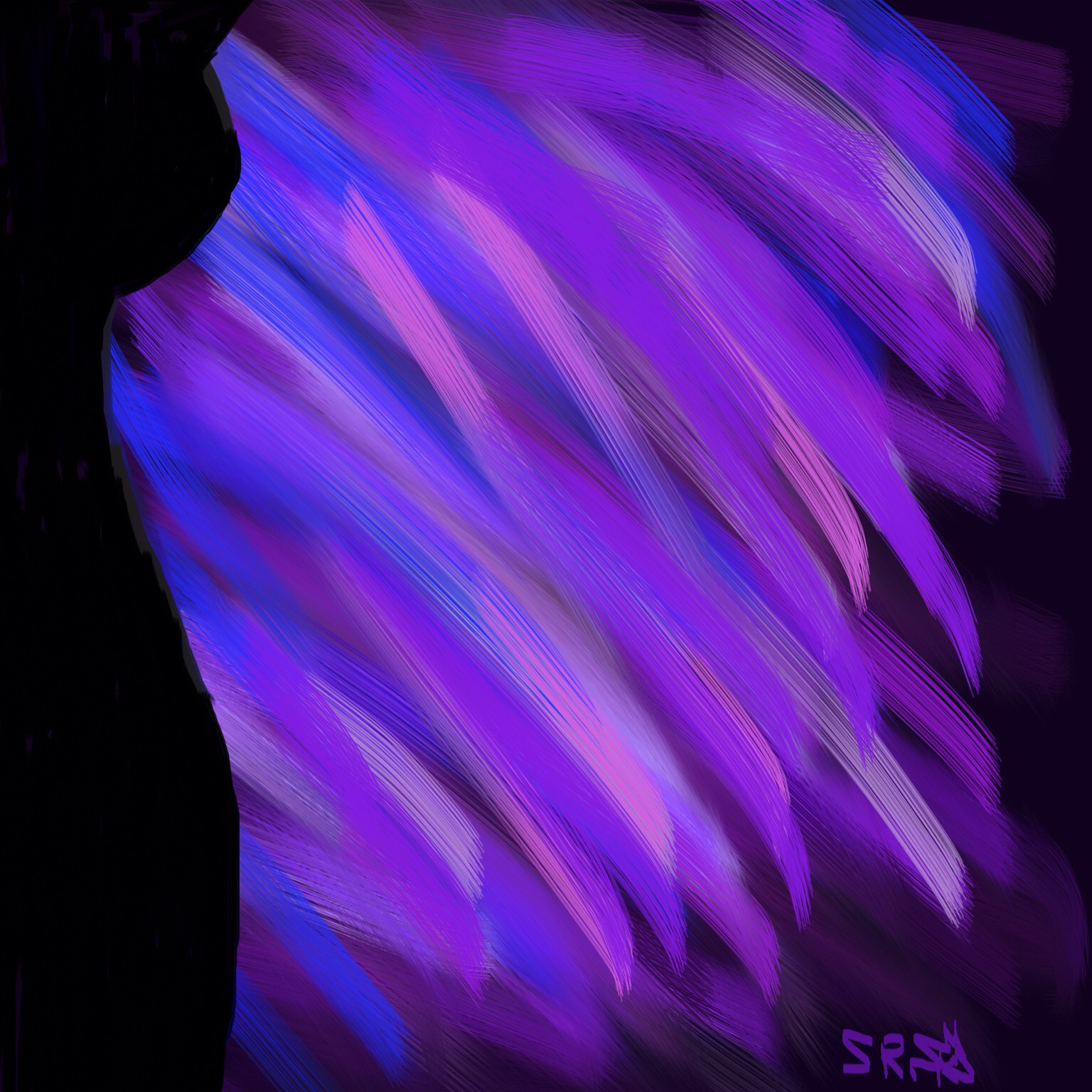
"Aura" has won a Special Recognition Award in the Photography and Digital Art category of the 2016 Abstracts Art Exhibition on Light Space and Time Online Gallery. The decision was announced on March 1, 2016. See it here! Thank you, Light Space and Time!
Monday, February 1, 2016
"Bright Lights, Big City" Wins Special Recognition Award

Many thanks to the Light Space and Time Online Gallery for awarding Special Recognition to my acrylics abstract painting "Bright Lights, Big City". It will be featured in the Painting Category of the 2016 Cityscapes Exhibition. Prints and other merchandise based off this painting can be got at Fine Art America and the original can be got by contacting me.
Saturday, January 2, 2016
"AvantAppal(achia)" and "Human Erased"
2016 has begun and for me - with a bang!
AvantAppal(achia) launched yesterday. I'm really excited about that. I received a suggestion that I should include examples of the type of work we want, but I didn't want to limit it too much. It is for the avant garde, after all. I did, however, include a reference to Wurm im Apfel Press in the mission statement, for those who feel they must have some kind of guide. But it's an ezine about experimentation so I wanted to keep things as open as possible. We are accepting submissions in written, audio, or video formats - as well as artwork. Submission deadlines are May 31st for the June 15th issue and November 30th for the December 15th issue. See this page for details, as well as the email address for all things AvantAppal(achia) related: http://www.avantappalachia.com/submissions.html We look forward to welcoming you to our Kin(folk)!

Also, "Human Erased" (digital painting; dated December 17, 2015) won a Special Recognition Award for the Photography and Digital Art category of the 5th Annual All Women Art Exhibition at the Light Space and Time Online Gallery. It will featured on the Gallery's website for the month of January 2016, after which it will be archived: https://www.lightspacetime.com/all-women-art-exhibition-2016-photography-digital-category/ It is available for sale at Fine Art America: http://fineartamerica.com/featured/human-erased-sabne-raznik.html

AvantAppal(achia) launched yesterday. I'm really excited about that. I received a suggestion that I should include examples of the type of work we want, but I didn't want to limit it too much. It is for the avant garde, after all. I did, however, include a reference to Wurm im Apfel Press in the mission statement, for those who feel they must have some kind of guide. But it's an ezine about experimentation so I wanted to keep things as open as possible. We are accepting submissions in written, audio, or video formats - as well as artwork. Submission deadlines are May 31st for the June 15th issue and November 30th for the December 15th issue. See this page for details, as well as the email address for all things AvantAppal(achia) related: http://www.avantappalachia.com/submissions.html We look forward to welcoming you to our Kin(folk)!

Also, "Human Erased" (digital painting; dated December 17, 2015) won a Special Recognition Award for the Photography and Digital Art category of the 5th Annual All Women Art Exhibition at the Light Space and Time Online Gallery. It will featured on the Gallery's website for the month of January 2016, after which it will be archived: https://www.lightspacetime.com/all-women-art-exhibition-2016-photography-digital-category/ It is available for sale at Fine Art America: http://fineartamerica.com/featured/human-erased-sabne-raznik.html

It is my hope that all of you have fabulous and challenging (in a good way) year! Thank you all for being loyal as we all head into new, promising endeavors.
Wednesday, December 30, 2015
AvantAppal(achia) Launch Date
Wednesday, December 2, 2015
Contemporary Appalachian Poetry: Something Taken, Something Given - Three Book Reviews

Jessica D. Thompson, Bullets and Blank Bibles, (Liquid Paper Press, 2013), 32 pages, poetry,
$6.00 U.S.

Roberta Schultz, Outposts on the Border of Longing, (Finishing Line Press, 2014), 32 pages, poetry,
$12.00 U.S.

Marianne Worthington, Larger Bodies than Mine, (Finishing Line Press, 2006), 30 pages, poetry,
$12.00 U.S.
Appalachian poetry, like its culture, is changing fast. If you think you know what to expect from it, think again. The three books I am reviewing here are on the more traditional end of contemporary Appalachian poetry, but this is not the poetry that came from the region 100 years ago. And it is not the poetry to come in the very near future. Still, one over-riding principle remains for Appalachian poets - no matter how they choose to practice their art: "For something taken, something/must be given." ("Something Taken", Bullets and Blank Bibles, Jessica D. Thompson).
When one's culture is in a rapid state of change, the urgent need is to reflect that instability while paying proper respect to what is passing. For some poets this means taking something - experimenting with radical new modes of expression in an effort to capture the mood of change and possibly form a language for what must inevitably follow. For other poets it means giving something - attempting to preserve some of what is passing. The three poets in this review are largely seeking to preserve the heritage and culture that is almost faded entirely into memory, that cozy, warm past that outsiders once derided and now seek out as tourists.
Marianne Worthington is probably the most notable of the three for this patient homage. Her tipping of the hat in Larger Bodies than Mine consists of family portraits painted deftly from memory in careful metered lines. There is very little alliterative play here, but the preciousness of it renders it surprising and rich where it does occur. Most of her collection focuses on various grandmothers. Heaneyesque in many ways, her verse teeters on the thin line of over-sentimentality without slipping over. This is nostalgia on the tongue and in the mind. While the forms rely heavily on meter, she does not make the mistake of rhyming into sing-song.
Jessica D. Thompson writes of the rural setting and a little of family, but Bullets and Blank Bibles is not as polished. It retains a bluntness Worthington does not allow for, an anger biting subtly below the surface. One might call it simply Discontent. Take this line from the best poem in the volume ("Turquoise") as an example: "We measure our life by what we love/but settle for what we are given". That's Appalachian culture summed up in one neat little aphorism (Thompson is good at that). Compromise is everything in a region that both nurtures and murders, and that is something she knows well. As with Worthington, her verse depends much on meter, but she stretches it a bit. It's a little more fluid, slightly unhinged. Alliteration gets more time on the page. But the overall pace is kept appropriately slow, measured, and deliberate, like the passing of the seasons.
Enter Roberta Schultz' Outposts on the Border of Longing. Though I don't think she means to, she serves as a kind of mediator between the more traditional poets of Appalachia and the radical, avant garde. She too pulls mostly from memory for her subject matter (and not all of it is PC), but her style makes the end result feel less lyrical and more confessional. She deviates from variations on blank verse more than the previous two and tries out forms less often used by the majority of poets on her side of the spectrum (striking example: "War: A Sestina"). Schultz does, unfortunately, indulge in a nauseating cuteness when she writes of her pet cat ("Be Careful What You Wish For"). For one horrifying moment, I thought I was judging an elementary school poetry contest! But then she recovers nicely with this anecdote as an explanation of her poetic philosophy:
"Night vision begins
at twenty minutes -
ten minutes after most
of us reach for a switch,
flushing our faith with fear,
leaving us night blind."
("Night Blind")
The encouragement here is explicit. Poetry is about intuition and insight, not the gathering of data or facts. This is even more true when the old modes of expression are rendered largely irrelevant by seismic cultural shifts. So we must allow ourselves to develop "night vision" and write from that.
While it is true that narrative, form, and meter remain strong components for these three poets, their work nevertheless contains powerful realisations that the old Appalachian ways are gone. Wistful and mournful, these poets clearly feel a keen sense of loss and separation from that which made them who they are. In doing so, they give something back to the culture that it is now missing from it. This serves as a needed balance to those contemporary Appalachian poets who take something by forging ahead to see what they can make of what comes next in the blinding light of the new unknown.
(For full disclosure: this is an unpaid review. No good or services were received.)
Subscribe to:
Posts (Atom)