
Tuesday, December 2, 2025

Wednesday, October 22, 2025
Is(sue) 18 Deadline Reminder

Dear Kinfolk,
This email is to remind you that the deadline for Is(sue) 18 is upon us. That is October 31, 2025. Please send us your most experimental, weird, avant-garde, fun poetry, art, and short stories.
Some of you may have heard by now: the Appalachian poetry community lost one of its great mentors and friends this month. Gurney Norman, former Kentucky Poet Laureate, passed away on October 12, 2025. As a tribute to this most generous soul, AvantAppal(achia) intends to dedicate Is(sue) 18 to him.
Please read the guidelines carefully and follow them when submitting. Emails which do not follow the guidelines will be automatically rejected. Thank you all for everything you do to make this ezine the bright jewel of 21st century writing and art that it is. It exists for you.
Sincerely,
Sabne Raznik
Poetry/Art Ed(itor)
Thursday, October 9, 2025

Saturday, September 20, 2025
Book Review of Erin O'Luanaigh's "Avail"
Erin O'Luanaigh, Avail (Paul Dry Books, 2026) poetry. Not yet released at the time of this review.
Erin O'Launaigh spent part of her childhood battling a clotting disorder and writes about it here sublimely. She uses the practice of veiling to express the de-bodying experience of no longer being allowed your own personal dignity and modesty, while at the same time no longer being seen as quite human that occurs as a patient. This collection is a beautifully astute window into the disabled person's world, written in a fresh, unheard voice. This should be required reading.
Favourite lines:
"with a love that, like all love,/ distorts its object// glazes it with ice,/ swallows it like a mailbox" - "Snow"
"And when I lived, I was embarrassed. I felt I'd let them down." - "A Childhood Illness"
"Nothing is less logical than the truth." - "The Awful Truth"
"to star in the movie of myself/ instead of playing second lead" - "The Awful Truth"
"the circulatory system is a veil our body has swallowed whole." - "Veins"
"the artist comes to see the world as a series of roads" - "Red Travels"
"To wear lipstick or to sweep blush on the apples of one's cheeks is to affect the appearance of blood. Pallor is a kind of frankness. A body drained of blood is a naked one." - "Blood as a veil"
Thursday, September 4, 2025
Sabne Raznik's Poetry Translated into Chinese
Sabne Raznik's poetry has been translated into Chinese for the first time.
Her long poem "Valhalla: blue" was translated into Chinese by Yongbo Ma and published in a journal today. The goal is to eventually publish a collection of these translations.
This first translation can be read here.
Wednesday, June 25, 2025
Review of Kris Ringman's "Sail Skin"
Kris Ringman, Sail Skin (Handtype Press, 2022) 70 pages, poetry. More info here.
Kris Ringman has written a contemplative poetry collection that aches with the longing for connection. There are images of taxidermy, an affinity with animals (particularly of the canine family), a cross-section of cultures, a cannibalism fetish, and, most strongly, a series of poems about sailing and the sea.
As a disabled person myself, I decided to reach out to presses that focus on publishing the work of disabled poets as a reviewer. This book is part of that initiative. Ringman is a deaf poet and writes from that perspective. Among their poems are those which speak of the "outside" feeling of being deaf and the idea of foxes that sign: "hands/ in the air spell out their feelings" - "If Paws Were Hands". A sublime moment is this: "The only reason I wish I could hear/ is to learn how to open my mouth - / ... // I want to make you weep/ from just one word - " - "Mountain".
Other favourite lines are:
"I follow them/ without my body, only the wish to become." - "Can't I Just Be a Fox?"
"like the memories you carry of the men/ who have assaulted you?// So careful,/ how they slow down - " - "That Precarious Edge"
"The problem with having lived in several countries/ is everything follows you home." - "That Precarious Edge"
"Since when is the world a solid place to stand?" - "A Boat Carries You"
"Sometimes only the broken pieces/ are showing, but that doesn't mean/ the rest isn't whole." - "Fox Skin"
Monday, June 16, 2025
Is(sue) 17 of AvantAppal(achia) is Live!

Is(sue) 17 is live to read now! Just click the link below.
A few things to note as this opens the submission period for Is(sue) 18: PLEASE, READ AND FOLLOW THE GUIDELINES WHEN SUBMITTING. We DO NOT accept simultaneous submissions. Please, include your state or country of current residence in a bio with your submission. And send us your weirdest, most experimental, avant-garde art, poetry, and prose. Think James Joyce and Beckett but in the 22nd century.
Thank you so much for sending in work from around the world and keeping this ezine as the foremost for the experimental in Appalachia for 9 years! This ezine reflects you and we couldn’t do it without you!
Sincerely,
Sabne Raznik
Dave Sykes
Tuesday, May 13, 2025
Book Review of Andrea L. Hackbarth's "waveforms: a short course in piano tuning"
Andrea L. Hackbarth, waveforms: a short course in piano tuning (Small Harbor Publishing, 2025) 37 pages, poetry. More info here.
This is hands down one of the best poetry collections I have read so far this year. Andrea L. Hackbarth tunes pianos as her day job and writes poetry as her passion. Here, they marry and have a child. This collection feels quite metapoetic in nature, using music as a metaphor for poetry. But is music a metaphor for poetry, or are music and poetry the exact same thing, using different instruments, Hackbarth's piano standing in for language? The boundaries blur, beautifully and divinely.
Favourite lines:
"They say it's possible to make of yourself a single song if you balance the force among your loves"
"Simply learn to use your tools as you press your ears into service."
"The possibility in a closed bud. The slow-moving glory-be of its opening"
"Spend hours in service of each singular note, then see if they hold."
"My mind has settled in the still of December, while my fingers tingle with recollections of summer wind."
"Generations of mothers and daughters echoing & echoing. Can you hear the long -forgotten matriarch?"
"Your task: to find where the whispers align among the notes"
"Listen: you may hear god's voice in the convergence"
"Who doesn't love an origin story? We repeat & repeat the one repeated to us and build our meager lives around it."
Tuesday, April 15, 2025
Is(sue) 17 Deadline Reminder

Here we are at the Deadline for Is(sue) 17, which is April 30, 2025. So: get your weird, wonderful, experimental poetry, art, and short stories in our inbox by then. This is your final reminder.
Thank you for making us the premier ezine in Appalachia for all things avant-garde! See you in June!
Sincerely,
Sabne Raznik
Poetry/Art Ed(itor)
www.avantappalachia.com
Tuesday, March 11, 2025
Review of Kalehua Kim's "Mele"
Kalehua Kim, Mele (Trio House Press, 2025) 100 pages, poetry, forthcoming on July 1, 2025. More info here.
Kalehua Kim explores themes of death, family dynamics, and the relationship between mother and daughter in this collection of songs as poetry. I was excited about this as an indigenous work. It seemed to have a lot of potential as a book that has many layers of possible understanding and prisms of viewpoints.
I was especially eager to learn some Hawaiian until I discovered that each time Hawaiian appears in the text, it is a repetition of an English phrase that has already occurred, making it merely decorative - a flower to signal that this is an indigenous poet - but serving no real depth of purpose in most cases. Identity as product placement?
My favourite parts of this collection are those that focus on the poet's personal memories of her mother: how she used to sing all the time, the songs they used to share, and the intimate moments by her deathbed. These moments carry the weight of depth and of real soul. This is where we feel closest to the emotional need that drives the poet to write in the first place and where the poetry feels the most original.
Favourite lines:
"I have lost all but one tale/ you told to me in childhood./ Days were longer then," - "Ka Hale, The Nurturing Place"
"You yearn for the days when your people died/ in the beds in which they were born." - "Dying Looks Like"
"we shared so/ many words/ all we didn't say/ full" - "Glottal Stop: My Mother's Last Words"
"Other mothers find me here://... they all come to me, mothers mothering me/ Mothering with a silence that is not her silence." - "Not One Parking Space"
"His silence, humid and thick as thunder,/ hangs heavier than the sun-sapped mangoes" - "Memory Sonnet"
"No cloth can keep you clean" - "Woman's Work"
"My belly ready to spill its light// ... I pushed until I broke open with light." - "Makalii and the Stars That Followed"
"the only way to look at time is to refuse to see time" - "Ha"
"The weight of fruit strengthens/ the branch eventually." - "Songs for the Life I Chose or How to Stay Together"
Wednesday, March 5, 2025
Review of Han VanderHart's "Larks"
Han VanderHart, Larks (Ohio State University Press, 2025) 86 pages, poetry, forthcoming at the time of this writing. More info here.
There's a lot going in this collection in a comparatively brief space. VanderHart covers subjects as variable as sibling-on-sibling child sexual abuse, mental illness, generationally changing values on parenting, a love of nature and herbalism and birds, a deep sense of place, etc. All written in a familiar Appalachian voice (but not the Appalachian language. Not to worry, if you are from elsewhere, this is written in standard American English but the Appalachian voice very much comes through). A lot of the poem titles are quotes, revealing that VanderHart has understood the assignment of every good writer: they read more than they write.
They hook you in with some comfortable poems that root you in place without explicitly naming that place. And then they land the punches of the real battles this book tip-toes around. I say "tip-toes", because as hard-hitting as some of this is, there is always the feeling that VanderHart is holding back, swallowing the worst, because they know it's too much for us. I respect that.
Favourite lines:
"I do not know whether it is morning or mourning" - "Invocation"
"My mother's family dammed the river and trapped the fish so often/ it became their name." - "The Body Is Water and the Water Has Origins"
"I think you should use the language/ of where you come from" - "Artist's Statement In a Mountain Cabin"
"Some things you fix/ and they break again/ and again" - "Broken"
"I measure your beginning by a glass of water and the hands that/ caught you. Somewhere" - "How people tell time is an intimate and local fact about them" Ann Carson
"... what's inside the heart and also/ the land: the dirt containing more" - "Virginia seemed like always right" David Lynch
"I Can't Let My Mind Go to the Thicket" - whole poem
"I want an otherworldly ex-/ planation for unkindness, which // is the milk of the world." - "Larks"
Ohio University State Press is a BIPOC/LGBTQIA+ Press.
Saturday, February 15, 2025
"Come Hell and High Water: Helene" Special Is(sue) Release

It’s here! The “Come Hell and High Water: Helene” Special Is(sue) is live! You can view it here:https://www.avantappalachia.com/special-issues.html. This is(sue) will remain readable on the website as long as the website exists under the Special Is(sues) tab on the menu. Thank you all for your heartfelt responses and tributes to this momentous event. Ironically, I am writing you this on the day that Central Appalachia is experiencing its annual Spring floods, except this year they are exceptionally fierce. Somehow, it feels appropriate.
Submissions are still open for our regular Is(sue) 17. The deadline for that is April 30, 2025. Send us your weirdest, most fun creations! Art, poetry, and short fiction. Please, follow the guidelines as we do reject submissions that do not meet the guidelines.
We wish everyone all good things and see you in April! Thank you for being wonderful, witty, experimental, and fabulous!
Sincerely,
Sabne Raznik
Poetry/Art Ed(itor)
Saturday, February 8, 2025
Review of Kiarah Hamilton's "this is what fifteen feels like"
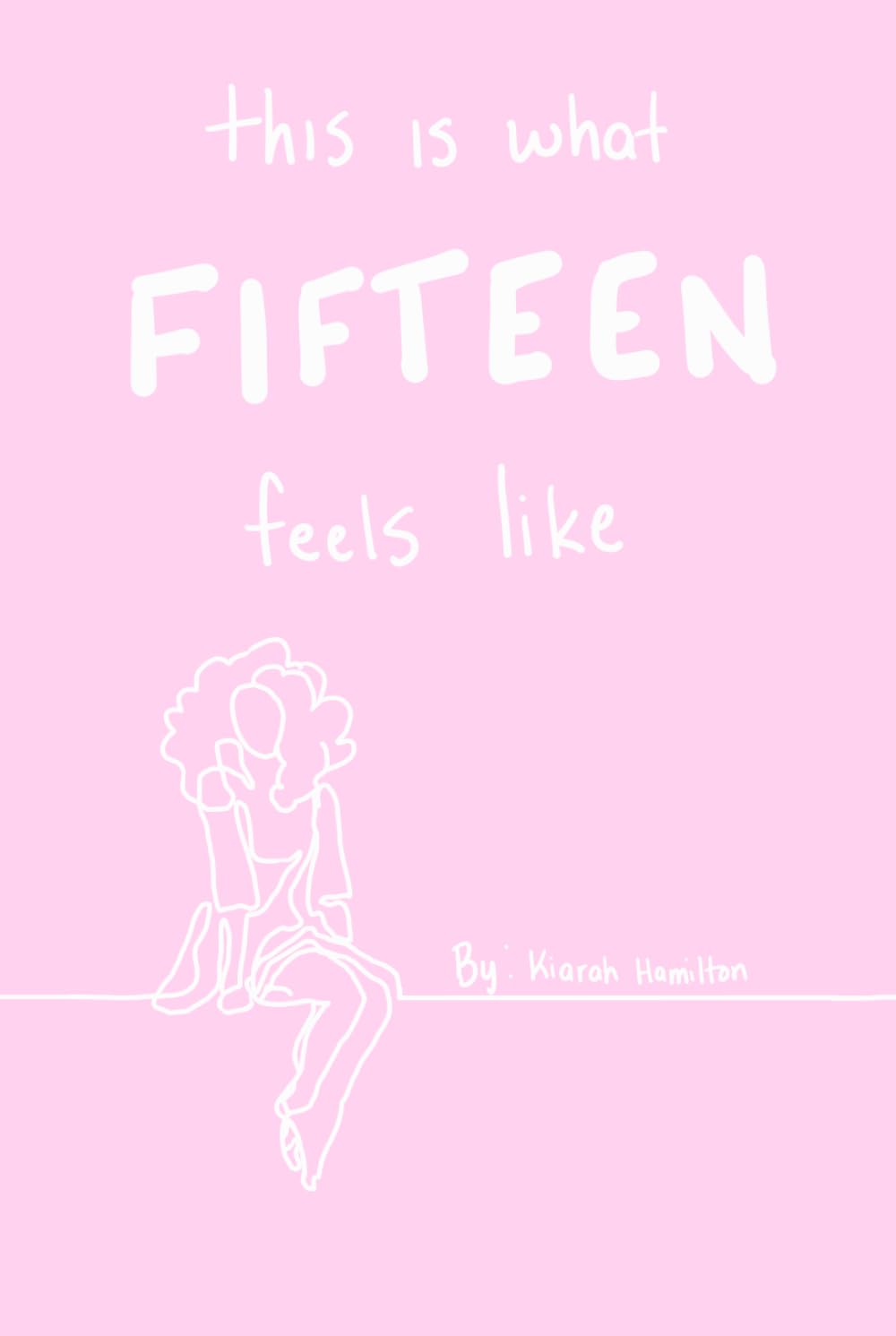
Kiarah Hamilton, this is what fifteen feels like (KDP, 2024) 145 pages, poetry, $19.99 US. Order here.
Hamilton invites us to read this collection from the point of view of our 15-year-old selves so that's where I'm going to write this review from (mostly). I say "mostly" because I'm late Gen X and Hamilton is Gen Alpha, I believe, so our 15s are very different POVs. When I was 15, the internet was called "Prodigy", it was dial-up, extremely expensive, almost no one had it (almost no one had a PC), and social media didn't exist yet. Late Gen X are in general a nihilist group of people who believed the world would end before they finished college and as teenagers were criminals and gangsters who got away with everything precisely because they were the first generation with parents who divorced at high rates, worked two jobs, daycare didn't exist yet, and smartphones were sci-fi. It was ghetto. I'm sure it's extremely difficult for kids today too, just in very different ways. Same old threats with new avenues.
As a teenager, I was a moody goth but not goth, punk but not punk, (nowadays the term might be "emo") loner who wrote poetry and lurked in shadows and wore black as often as my mother would let me get away with it. Because if you wear black and stand very still, you can be as near to invisible as physics allows. Very handy for avoiding bullies. My poetry was similar to Hamilton's but much less innocent and light. I wrote about dark stuff. I wrote about stuff I lived with, violence and loneliness and darkness. And I found beauty in it. And, stereotypically for a teenage poet of my generation, I could quote Edgar Allan Poe's "The Raven" on cue (I can't anymore). None of my early poetry survives today.
Hamilton writes more as a teenager should, if there is such a thing. Her poetry is as light, innocent, and clean as her book cover. It's refreshing. She writes about the pressures social media puts on youth to have a certain appearance, which is something that certainly hasn't changed, although social media has prismed it uniquely. She writes about social anxiety, the stresses that hormonal changes bring, trying out different hobbies to find a few that'll stick as she works out who she is, and her crushes. All typical of the adolescent experience. And which certainly do help take you back to your own personal experiences.
There are some poems here that give you a window into Hamilton herself. She writes about moving around a lot and about her family dynamics. Another fun feature is that she includes a playlist of songs that you can look up on Spotify or YouTube. This places her 15 in a specific time frame - more so than the copyright notice will because not everyone reads a title page - but it also includes a whole other dimension to the book and a view into the poet's mind. I particularly liked this because when I write, I always have soundtracks in mind too. But since it never occurred to me that I could simply write up a playlist to include, I weave the songs into the poems and books themselves in ways I'm sure no one has caught on to, lol. Hamilton's playlist is an elegant solution to this conundrum.
In summary, this is what 15 feels like. The poetry is not sophisticated. That's not what you're here for. But it is what you're here for. A walk down memory lane vicariously. A reminder that no matter how many years have passed, 15 is never very far away.
Thursday, January 2, 2025
Review of Stephen Spanoudis' "Final Orbit: Not All Ghosts Are Human: The Autobiography of Mario Ng (The Republic of Dreams)"

Stephen Spanoudis, Final Orbit: Not All Ghosts Are Human: The Autobiography of Mario Ng (The Republic of Dreams) (The Other Pages.org, 2021) 215 pages, fiction, $9.99 US. Order here.
I am a poet and I read mostly poetry and nonfiction. In 2023, I decided to read more fiction. I want to learn how to write better prose to write the stories my grandparents wanted me to write. Better late after their deaths than never. And there is no better way to learn how to write than to read. And it seems the world is conspiring to help make that happen: I always wanted to join a book club and that happened in 2024. What is the group interested in reading? Fiction. And in 2023, Stephen Spanoudis gifted me (out of the blue) two of his novels.
Both these novels are part of a series. Final Orbit is the 8th book but is written as a prequel to the others. This review will focus on Final Orbit. A review of the second book is forthcoming.
Final Orbit took a while to get off the ground (pun intended). You had these two incredibly determined and intelligent people overcoming underprivileged backgrounds to succeed in challenging careers (astronaut and musician, respectively). They have fulfilling lives. Everything seems to be winding down to a kind of calmer precursor to retirement and I'm wondering "but am I only halfway through the book?" And then BOOM (literally), the real story kicks off. And takes your breath away, rips your heart out, and leaves you gasping and needing to take a walk around the room a few times. You're going to need to take a minute. That's just the first drop of this roller coaster.
This book is equal parts future dystopia, science fiction, drama, romance, psychological study, and inspirational fiction, with a bone thrown to the Harry Potter in the briefest way possible, and for once the U.S. is a side character in major "historical" events. It's popular today to categorize fiction as narrowly as possible for social media tags. But it's difficult to categorize this in any way more niche than simply "fiction" because it fits so many tags at once.
I'm tempted to say there could be maybe a little too much happening here. It's a lot to process emotionally and mentally for an average reader. It's definitely written for an intelligent, quick-thinking type who will be mindful to shepherd themselves kindly through the emotional ups and downs. But there are valuable nuggets of wisdom one can carry forward into the real world as well.
Monday, December 16, 2024
Is(sue) 16 is live!

Is(sue) 16 is live! It has work from 7 countries and 12 states in the U.S.
The Arch(ive) for Is(sue) 15 is a poem by John Paul Caponigro, artwork by Edward Supranowicz, and a short story by Barbara Kumari.
The submission period is open for the “Come Hell and High Water: Helene” Special Is(sue). It is absolutely vital that you put “HELENE” in the subject line of your email. Otherwise, we will assume that email is a submission for Is(sue) 17. The deadline for this Special Is(sue) is January 15, 2025. Please, read the guidelines under the submissions page tab and the information about this Special Is(sue) on the home page before submitting.
Kinfolk, you make this ezine everything that it is. So keep that weird, wonderful, experimental, fun stuff coming! You are amazing!
Sincerely,
Sabne Raznik
Poetry/Art Ed(itor)
Tuesday, November 19, 2024
Review of Douglas Cole's "The Cabin at the End of the World"

Douglas Cole, The Cabin at the End of the World (Unsolicited Press, 2024) 98 pages, poetry, $16.95 US. Order here.
This reads like a pandemic book. It is full of frenetic energy as if we are inside the head of a shut-in with cabin fever. It starts out as a collection of prose poems rooted in locations. We bounce around the U.S. with a series of snapshot-like moments and roll-call listings of street names. And lines like these:
"I wash my face. I make food. I look out a window. Time is very slow. Winter extends itself. I lift weights, think or read. Spring is under glass. And if you read much further, you become part of the fable." - "Distances"
As the book evolves, however, the energy calms, the poems change form, and you are introduced to the title cabin and the (increasingly more content) human who inhabits it. Therefore, this book represents a journey. At first, it seems quite external perhaps. But it becomes clear that the journey is an internal one of someone learning to enjoy a measure of solitude in a "cabin at the end of the world".
Lines that stood out:
"he has to say stone and stone again" - "Drive Through"
"Darkness swallows the city down to its diamond feet and snakeskin streets" - "Infinite Gaze"
"a drone-dead sky blasted open with no parachute to cling to" - "Notes for The Grey Man"
"Like an abandoned theatre, as I wander through the empty rooms because there's no one else here. Time is happening without me." - "Caught in a Dream"
"water can tell how it took down mountains to liberate you" - "West Cove"
Disclosure: I did receive a free review ebook copy to read in order to write this review, as is industry standard.
Kevin Kiely Reviews "Faller"

"Faller" by
Sabne Raznik
These fictional poems from Raznik come with a ‘trigger warning’ 20 years after the 9/11 Twin Towers Tragedy in New York. The Photo of “The Falling Man” is referenced along with those of the others who died. Raznik says ‘I borrowed a word from the sport of steeplechasing, one that I feel is more accurate, fully inclusive, and carries no stigma: Fallers.’
Her hyper-delicate, hyper-sensitized material is red flagged thus: ‘Nor is it meant to cause pain to anyone who lost loved ones that day. Nor is it meant to trigger anyone who battles depression and suicidal ideation’ […] ‘this book is a personal psychological purging.’
Impossible to not engage in some give-away of content within FALLER by sampling lines at random. There is anonymity held to, in that those who are among the Faller(s) and falling 'are' in flights of time, speed, rapidity and fleeting reality which makes this a fast-forward plunge with the words, it cannot but be: language falling into or onto where?
This depends on your own personal reading as to what place, space or time you arrive 'within' reaching the last line. Here are clusters of word-scape that fell out as this review aspect-wheeled through the lines of Sabne Raznik in FALLER.
The urgent poems are stark as in:
‘I remember reading in school about
The Triangle Shirtwaist Factory Fire,
How some jumped to their death
Rather than burn since there was
No way out.’
‘When I land, they’ll be precious little left
More than an imprint in the sidewalk.
Hope I don’t hit anyone below…’
‘Like we were standing inside the sun.
So much paper around me, like snow.
I am snow now.’
‘Do you remember, little brother, how we use to
Drop water balloons off the fire escape?
Count how long they took to fall?
How we tried to film impact and slow down the tape?
Our science projects?
It’s like that.’
Raznik has also released a collection of artworks Renaissance: Visual Art 2005 - 2019. She founded and co-edits AvantAppal(achia) ezine and believes herself to be a supranational poet, in that she feels the arts transcend manmade boundaries.
- Review of Sabne Raznik FALLER. © Kevin Kiely., Poet, Critic, Author; PhD (UCD) in the Patronage of Poetry at the Edward Woodberry Poetry Room, Harvard University; W. J. Fulbright Scholar in Poetry, Washington (DC); M. Phil., in Poetry, Trinity College (Dublin); Hon. Fellow in Writing., University of Iowa; Patrick Kavanagh Fellowship Award in Poetry; Bisto Award Winner.
Recent Publications include: ‘Stratford-upon-Shakespeare and other Lies’ AND 'The Principles of Poetry DI + ID = Ѱ Psi' Books available on AMAZON.
Sunday, November 10, 2024
Announcing New Release: "Faller" by Sabne Raznik

A collection of poems written as if in the voice of some of the "fallers" on 9/11/2001, not from a political view, but as a way to process the collective trauma of that day and as a tribute to those lives lost.
Faller is another profound collection by Sabne Raznik. intense, emotional and surreal. "The world is beautiful/At velocity." is only the first line out of all these poems that caught my eye. it makes me stumble. the beauty of this image at the emotional terror that proceeds. moving back and forth from mundane tasks and thinking of children, to the thoughts and questions of falling. it touts your mind. it pulls you in many directions. and then the beautiful love sadness of:
I was afraid to jump alone.
The jacket of my waiter’s uniform felt
Claustrophobic
So I threw it out first.
Then a woman from Table 3
Took my hand and we jumped together
Wordlessly.
so i threw it out first. that line echos in my head. the way the jacket becomes a bird. an image of acceptance, before the calm. - john compton, my husband holds my hand because i may drift away & be lost forever in the vortex of a crowded store
In Faller, a collection of poems, Sabne Raznik makes you really feel for the people who fell from the Twin Towers on 9/11. These poems, written in the voices of those who fell, are heart-wrenching. They make you think about what you would do if faced with certain death. If you were judgemental of the people who fell, you won't be after reading these evocative poems. The voices in these poems are so realistic, it's like it actually happened to the author. She puts you in these people's shoes. I've complained about things like a fax machine on the job before, so lines like: "The coworker who complains/about the copier was/standing on her desk/ because the floor burned/through her shoes" really strike a chord in me, make me realize how miniscule and petty my office complaints are in the light of a building burning so fiercely that you have to escape, even if it means certain death. When you read these poems, there is no way you can possibly think of these fallers as suicidal. These poems have eye-opening lines: "The world is beautiful at velocity. Just colour./Like an abstract painting." You really feel the tragic quality of the situation when you experience these voices: "I quit yesterday./I'm just here to get my things." You will come away with a new perspective on having to face death after reading these sad but beautiful, evocative poems. - Lori Lasseter Hamilton, limo casketAvailable for free on Sabne Raznik's official website.
Monday, November 4, 2024
Announcing "Come Hell and High Water: Helene" Special Is(sue)

Dear Kinfolk,
The deadline for Is(sue) 16 is closed so, if you sent in
submissions for that, you should hear back from us in the next couple months on
those. And Is(sue) 16 should go live on December 15, 2024.
Therefore, it is time for us to announce the “Come Hell
and High Water: Helene” Special Is(sue)! This is our tribute to the
before-and-after geological and emotional event that Helene proved to be for
our beloved Appalachia. It is your opportunity as our Kinfolk to express your
emotions around this traumatic time, and for our mountains and people, as they recover.
Unlike the regular is(sues), special is(sues) live on the website for as long
as the website exists, under the “Special Is(sues)” page tab on the menu. Special
is(sues) have the same sub(mission) guidelines as the regular is(sues), with
the exception that you must put “HELENE” in the subject line to differentiate
submissions for this special is(sue) from those meant for a regular is(sue). That
is vital. For this special is(sue), sub(missions) will open on Wednesday,
November 6, 2024, and the deadline will be January 15, 2025.
The Is(sue) will go live on February 15, 2025. We hope that this
will provide a cathartic and healing space for us all.
So, by all means, send us your poetry, art, and short
stories expressing yourselves experimentally and therapeutically about Helene.
We’re here for you.
Sincerely,
Sabne Raznik
Poetry/Art Ed(itor)
Saturday, September 28, 2024
Review of the book "Hortensia: in winter" by Megan Merchant
Megan Merchant, Hortensia, in winter (New American Press, 2024) 66 pages, poetry, not released yet at the time of this review. Preorder info here.
Hortensia: another name for the hydrangea flower. It's also the poet's ancestor who was a follower of Joseph Smith. After Smith's death, and when that Church accepted polygamy, Hortensia broke with Brigham Young and followed Joseph Smith's widow. That belief system ended with Hortensia, it seems. Merchant is a non-practicing Catholic. In this collection, Merchant explores the connection of generations through time.
In profound, lilting lines that feel as though they ought to appear on glossy photo paper surrounded by peonies - cozy like a coffee shop but trendy like an interior design magazine - Merchant seeks to tie the mundane motions of her everyday life back to Hortensia to empathize with her. How do the tiny details of living repeat across generations? How can ancestors we never knew bring comfort when we learn significant news? Merchant asks these questions of Hortensia. Although the book is composed of prose-poem meditations that are mostly inward-focused, the overall effect feels like an attempted conversation. Where Hortensia fails to speak in return, the poems tend to read as letters to Hortensia, rather than as mere thoughts.
This is one of the best collections of poetry I've read this year.
Lines that stood out:
"I want to ask the hard questions, but they sharpen back to god." - "Invocation"
"Were you given the smallest room in the house of your own life? I am gifted a single window." - "Helpmeet"
"A woman's work, I was taught, was to endure. ... A woman must remain pure." - "Applying to Sainthood"
"Now no daughter will seed. I will be scraped clean." - "Merciful"
"I am learning the landscape of my lineage now... I'd like to find more than a name to hang in the rearview mirror." - "Picking Wild Berries"
"What notes still play in my blood? What warnings?" - "Score"
"I take your silence as permission to continue." - "Famine"
"Hymn" - the whole poem
"To sink into the earth is a gift ... a kind of holiness ruptured." - "Have You Branded an Animal that You Did Not Know to Be Your Own?"
"Salvation" - the whole poem
"This year I am hungered down to bones." - "How to Describe Winter"
"Regret is a scratch of light between trees." - "Watching the Praire Fires as Pastime"
"The abyss I feel in my bones." - "Portraiture: Dark Room, Self in the Mirror"
"My interior is unchurched. ... the way the wind is tongue-tied at the mountain base." - "Love"
"The testimony of wreckage, beautiful." - "Harmonies"
"The only thing that matters is what comes after the last word." - "Invocation" and "Revision"
Disclosure notice: I received an Advance Review Copy of the book to read and write this review. No money was exchanged.
Subscribe to:
Posts (Atom)